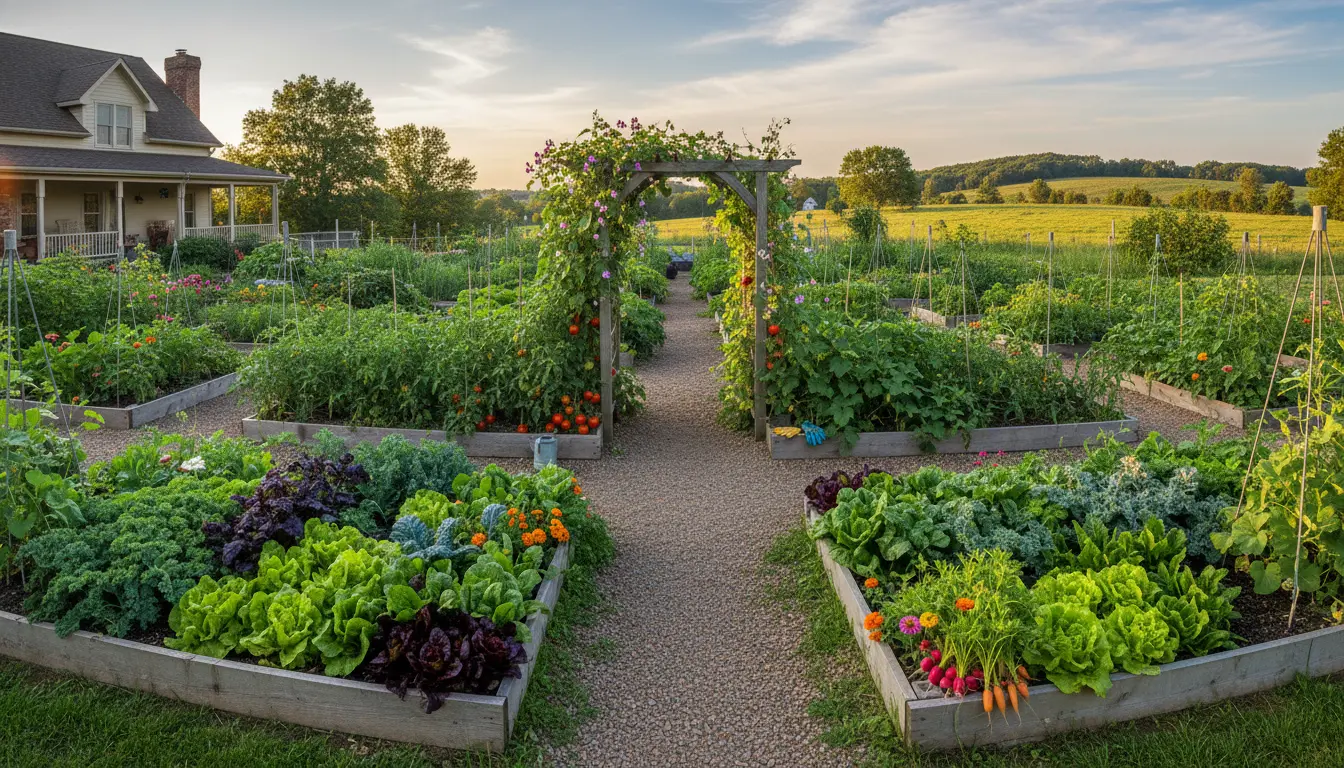
Starting a vegetable garden can be simple and rewarding. This guide explains practical steps to plan, plant, and maintain a productive vegetable garden at home.
Why start a vegetable garden
Knowing why you want to start a vegetable garden helps shape your plan. Whether you want fresh food, exercise, or lower grocery bills, a clear goal keeps your garden focused.
Beginner gardens can be small and low-cost. Even a few containers or a small raised bed can produce herbs, lettuce, and tomatoes for months.
Choose the right site to start a vegetable garden
Site selection matters for success. Pick a spot that gets at least six hours of sun each day for most vegetables.
Also consider water access, wind protection, and soil drainage. If space is limited, use containers or raised beds on a balcony or patio.
Sunlight and shade
Most vegetables need full sun. Leafy greens tolerate partial shade, so map the sun across your space at different times of day.
Soil and drainage
Good soil drains well and holds nutrients. If your soil is heavy clay or shallow, raised beds with quality topsoil are an efficient solution.
Plan what to plant in your vegetable garden
Select crops based on your climate, season, and kitchen use. Start with easy, reliable plants to build confidence.
Common beginner choices include tomatoes, lettuce, radishes, beans, and herbs like basil and chives.
Consider planting times
Learn your local last frost date and plant accordingly. Cool-season crops (lettuce, spinach) go in early spring or fall. Warm-season crops (tomatoes, peppers) go in after frost.
Companion planting basics
Some plants do well together and can reduce pests. For example, basil grows well near tomatoes and can improve flavor.
Prepare soil and start planting
Healthy soil is the foundation of a productive vegetable garden. Test soil pH if possible; most vegetables prefer pH 6.0–7.0.
Add compost to improve texture and nutrients. A good rule is to mix several inches of compost into the top 6–8 inches of soil.
- Use compost or well-rotted manure for nutrients.
- Avoid fresh grass clippings or uncomposted kitchen waste directly in beds.
- For containers, use high-quality potting mix rather than garden soil.
Watering and feeding your vegetable garden
Consistent water is essential. Most vegetables need about 1 inch of water per week, more in hot weather.
Water at the base of plants to keep foliage dry and reduce disease. Mulch helps retain moisture and suppress weeds.
Fertilizing tips
Use a balanced fertilizer or slow-release organic options. Follow product directions and avoid over-fertilizing, which can harm plants.
Common pests and disease management
Pests and diseases are part of gardening. Early detection and simple controls keep problems manageable.
Use these steps to protect your vegetable garden:
- Inspect plants weekly for holes, spots, or wilting.
- Use row covers to protect seedlings from insects.
- Introduce beneficial insects like ladybugs for aphid control.
- Remove and compost diseased plants away from healthy beds.
Interplanting marigolds or nasturtiums can naturally reduce some garden pests and attract beneficial pollinators.
Small case study: A simple balcony vegetable garden
Maria, a city resident with a small balcony, started a vegetable garden in four 12-inch pots. She planted cherry tomatoes, basil, leaf lettuce, and a pepper plant.
Within three months she harvested salad greens twice weekly and several pints of cherry tomatoes. Her yields proved that even limited space can supply fresh produce with consistent watering and daily checks.
Seasonal care and harvest
Keep a calendar for planting and harvesting. Some crops mature quickly, while others need months to produce.
Harvest regularly to encourage more production. For example, pick tomatoes when fully red and lettuce when leaves are baby-size for tender flavor.
End of season tasks
At season end, remove spent plants and add them to compost if disease-free. Plant cover crops or add mulch to protect soil over winter.
Beginner checklist to start a vegetable garden
- Choose a sunny site or container area.
- Decide which vegetables match your climate and taste.
- Prepare soil with compost or buy quality potting mix for containers.
- Plant at the right time for your zone.
- Set a watering schedule and mulch to retain moisture.
- Monitor for pests and diseases weekly.
Quick tips to keep your first vegetable garden productive
- Start small to avoid overwhelm.
- Choose starter plants (transplants) for faster results if you lack seed-starting experience.
- Keep tools clean and label rows with planting dates.
- Learn from each season and make one improvement at a time.
Starting a vegetable garden is a hands-on learning process. With basic planning, good soil, and regular care, even beginners can grow reliable crops and enjoy fresh food at home.