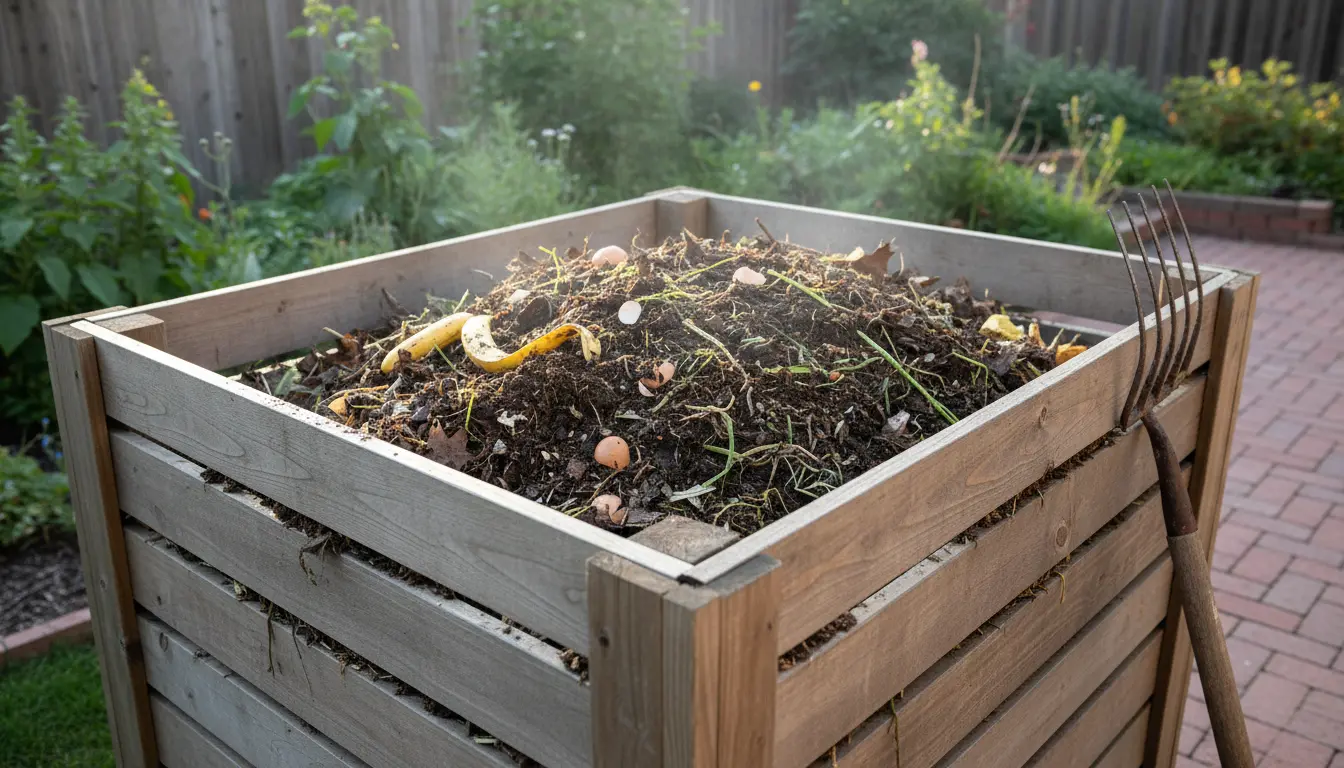
Start Backyard Composting with a Simple Plan
Backyard composting turns kitchen and garden waste into a useful soil amendment. This guide gives clear steps for beginners to set up, manage, and troubleshoot a compost pile or bin.
Why Backyard Composting Matters
Composting reduces landfill waste and returns nutrients to your soil. It improves soil structure, water retention, and plant health while lowering household waste disposal costs.
Benefits of Backyard Composting
- Reduces kitchen and yard waste by up to 30–50%.
- Produces a free soil amendment for gardens and containers.
- Improves soil fertility and reduces the need for chemical fertilizers.
- Helps retain moisture and reduce erosion in soil.
Choose the Right Composting Method for Your Yard
Select a method that fits your space, time, and effort. Common options include open piles, tumblers, and stationary bins. Each method works but requires different maintenance levels.
Common Methods
- Open pile: Low cost and flexible for large yards. Needs turning and space.
- Compost bin: Contained, tidy, and good for suburban yards. Offers better heat retention.
- Tumbler: Fast mixing and convenient for small quantities. Easier to turn but more expensive.
What to Compost in Backyard Composting
Balance carbon-rich “browns” with nitrogen-rich “greens” to create healthy decomposition. Aim for a rough carbon-to-nitrogen balance similar to 25–30:1.
Examples of Browns and Greens
- Greens (nitrogen): vegetable scraps, fruit peels, coffee grounds, grass clippings.
- Browns (carbon): dry leaves, shredded paper, cardboard, straw, wood chips.
Step-by-Step Backyard Composting Setup
Follow these simple steps to get a compost pile started in your backyard. Use materials on hand where possible to save cost.
- Pick a location: partial shade with good drainage and easy access.
- Choose a container: bin, tumbler, or a simple open pile.
- Start with a base layer of coarse browns for airflow (twigs or straw).
- Add alternating layers of greens and browns about 2–4 inches thick.
- Moisten as you build: pile should be damp like a wrung-out sponge.
- Turn the pile every 1–2 weeks to add oxygen and speed decomposition.
Maintaining Your Backyard Composting System
Regular maintenance keeps decomposition steady and prevents odors. Monitor moisture, temperature, and the balance of materials.
Quick Maintenance Checklist
- Moisture: Add water if too dry, add browns if too wet.
- Airflow: Turn to aerate and prevent anaerobic odors.
- Size: Optimal pile is at least 1 cubic meter or a minimum of 3x3x3 feet for heat retention.
- Time: Compost can take from 2 months (hot composting) to 12 months (slow composting).
Composting can cut household organic waste by nearly half and produce nutrient-rich humus that improves garden yields.
Troubleshooting Backyard Composting Problems
Most issues are simple to fix once you identify the cause. Use the checklist below to diagnose common problems.
Common Problems and Fixes
- Bad smells: Usually from too much wet, green material. Add dry browns and turn the pile.
- Pests: Avoid meat, dairy, and oily foods. Use a covered bin or bury scraps in the middle of the pile.
- Slow decomposition: Add nitrogen-rich greens and increase turning to raise internal temperature.
- Pile is too dry: Add water gradually and mix to rehydrate the material.
Small Real-World Example: A Neighborhood Garden Case Study
Maria manages a community garden with a 200-square-foot plot. She started a 3-bin compost system using kitchen scraps and collected fall leaves from neighbors. Within six months she produced rich compost, reduced municipal waste pickups for the garden by 60%, and improved raised bed yields by 25%.
Key actions Maria took were: consistent layer balancing, weekly turning of the active bin, and educating volunteers on what to compost. This simple routine kept the system efficient and pest-free.
How to Use Finished Compost
Finished compost looks dark, crumbly, and smells earthy. Use it to enrich garden beds, as a potting mix component, or as a top dressing for lawns and containers.
Application Tips
- Mix 1 part compost to 3 parts soil for planting beds.
- Top-dress lawns with a thin layer and water it in.
- Use compost as seed starting mix when blended with sand and perlite.
Final Checklist for Backyard Composting Success
- Select a method that fits your space and schedule.
- Balance greens and browns and maintain moisture.
- Turn the pile regularly and monitor temperature.
- Avoid prohibited items like meat, dairy, and diseased plants.
- Use finished compost to improve soil health and plant growth.
Backyard composting is a low-cost, high-impact practice for sustainable gardening. With a little setup and routine maintenance, anyone can convert household organic waste into a valuable resource for healthy soil.