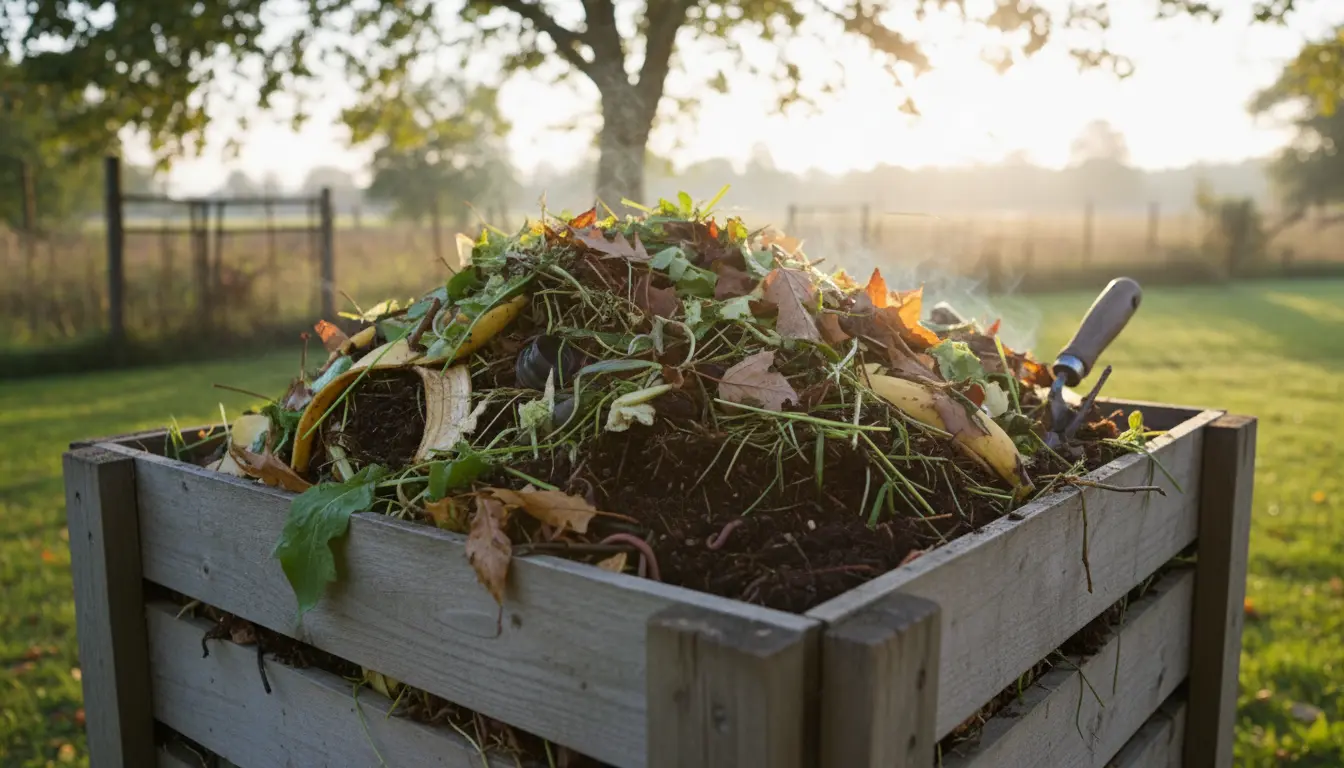
Home Composting Basics
Home composting turns kitchen scraps and yard waste into rich, usable soil. It reduces trash, saves money, and improves garden health.
This guide explains simple steps for beginners, equipment choices, and common problems with clear, actionable advice.
Why Choose Home Composting
Composting reduces landfill waste and returns nutrients to your soil. It also helps retain moisture and supports beneficial microbes.
Beginners can start small and scale up as they learn what works in their climate and space.
Setting Up a Home Compost System
Choose a method that fits your space: a backyard bin, tumbler, or a small worm composting setup for apartments. Each option has pros and cons.
- Backyard bin: Low cost and large capacity.
- Compost tumbler: Faster turning and cleaner handling.
- Worm bin (vermicomposting): Great for indoor use and kitchen scraps.
Location and Size
Place your bin on bare soil to allow organisms to move in. Pick a spot with partial shade to avoid overheating or drying out.
For most households, a 3x3x3 foot bin is sufficient to process weekly kitchen waste.
Basic Tools and Materials
You only need a few items to get started: a bin, a garden fork or pitchfork, a small shovel, and a kitchen container for scraps.
Optional tools: a compost thermometer, aerator, or a compost tumbler for easier turning.
What to Compost
Compostable materials fall into two main groups: greens and browns. Balancing them is key to a healthy pile.
- Greens: Vegetable and fruit scraps, coffee grounds, fresh grass clippings. These add nitrogen.
- Browns: Dry leaves, straw, shredded paper, cardboard. These add carbon.
A simple target ratio is roughly 2 parts brown to 1 part green by volume. Adjust if the pile smells or is too dry.
Materials to Avoid
Do not add meat, dairy, oily foods, diseased plants, or pet waste from carnivores. These attract pests and can introduce pathogens.
How to Maintain Your Compost Pile
Maintain moisture like a wrung-out sponge. Turn the pile every 1–2 weeks to add oxygen and speed decomposition.
Break up large items and layer greens and browns as you add new material to maintain balance.
Troubleshooting Common Problems
- Bad smell: Add more browns and turn the pile to increase aeration.
- Too dry: Add water and more greens or cover the pile to retain moisture.
- Slow decomposition: Chop materials into smaller pieces and increase turning frequency.
Composting can reduce household waste volume by up to 50 percent and cut methane emissions from landfills.
How to Tell When Compost Is Ready
Finished compost is dark brown, crumbly, and smells earthy. It should no longer show recognizable food or leaf fragments.
Depending on method and conditions, composting can take from 2 months (hot, well-managed piles) to a year (cold piles).
Using Finished Compost
Use finished compost to top-dress lawns, mix into garden beds, or create potting mixes. It improves soil structure and nutrient content.
Apply a 1–2 inch layer to garden beds or mix 20–30 percent compost into planting soil for seedlings and transplants.
Real-World Example: Small Urban Household
Case study: A two-person apartment used a worm bin under the sink. They collected daily vegetable scraps and shredded cardboard as bedding.
After six months they produced enough castings to feed a balcony herb garden and reduced their trash by nearly half. Regular feeding and harvesting every 2–3 months kept the system balanced.
Quick Start Checklist for Home Composting
- Choose a bin type that fits your space and budget.
- Collect kitchen scraps in a covered countertop pail.
- Balance greens and browns; aim for roughly 2:1 browns to greens.
- Maintain moisture and turn the pile routinely.
- Harvest finished compost when dark and crumbly.
Final Tips for Beginners
Start small and track what you add for the first few months. This helps you learn how your pile behaves in local conditions.
Don’t be afraid to experiment: different mixes and turning schedules work better in different climates and seasons.
If you want one actionable step today, set up a small indoor or outdoor container and begin collecting food scraps. Composting is low-cost and quickly becomes a practical habit with visible benefits.