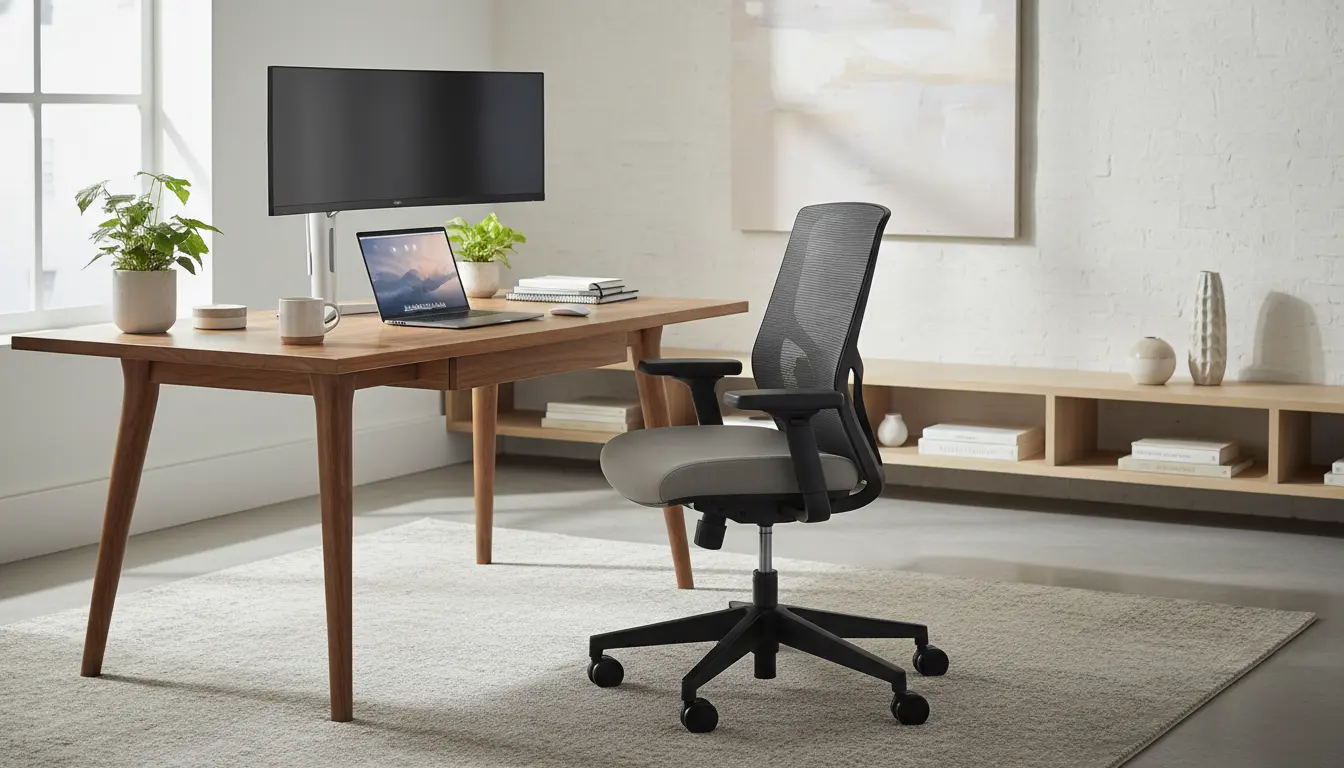
A reliable home office setup for remote work improves comfort, reduces fatigue, and boosts productivity. This practical guide explains the essentials and gives clear steps to create a functional workspace at home.
Why a good home office setup for remote work matters
Remote work blends personal and professional spaces, which can blur boundaries and reduce focus. A dedicated, well-planned setup supports posture, concentration, and consistent work habits.
Employers and employees both benefit: fewer breaks for discomfort, clearer video calls, and better task flow. Small changes in layout and tech often deliver large gains.
Ergonomics in your home office setup for remote work
Ergonomics prevents strain and injury. Start with chair, desk, and monitor height to keep joints neutral and reduce muscle tension.
- Chair: Adjustable height and lumbar support. Feet flat on the floor or on a footrest.
- Desk: Elbow height when typing, with 10–20 cm knee clearance under the desk.
- Monitor: Top of screen at or slightly below eye level, about an arm’s length away.
Lighting and background for remote work
Good lighting reduces eye strain and improves camera quality on video calls. Natural light is best, but artificial sources can complement it.
- Place your desk perpendicular to windows to avoid glare.
- Use a neutral-colored background or a simple bookshelf for video calls.
- Consider a desk lamp with adjustable color temperature for late-night work.
Tech essentials for a home office setup for remote work
Reliable tools make remote work smooth. Focus on internet stability, clear audio, and efficient peripherals.
- Internet: Wired Ethernet or robust Wi‑Fi with at least 25 Mbps for most remote tasks.
- Audio: Headset with noise-cancelling mic or a good USB microphone for meetings.
- Peripherals: External monitor, keyboard, and mouse reduce fatigue and speed up work.
Step-by-step checklist for a home office setup for remote work
Follow this checklist to build or improve your workspace quickly. Each step is actionable and inexpensive where possible.
- Choose a dedicated spot: quiet, well-lit, and with minimal foot traffic.
- Clear clutter: a tidy desk reduces distractions and supports focus.
- Set ergonomics: adjust chair, desk, and monitor as noted above.
- Optimize lighting: combine ambient light with a task lamp to balance contrast.
- Secure connectivity: test speed and consider a powerline adapter or mesh Wi‑Fi if needed.
- Improve audio: test microphone and reduce background noise with simple sound absorbers like curtains or a rug.
- Plan cable management: Velcro ties and clips keep cords out of the way.
- Personalize minimally: one or two plants or a small photo can improve mood without cluttering.
- Set boundaries: communicate work hours to housemates and use a visible sign if needed.
Budget-friendly tips for a home office setup for remote work
You don’t need expensive gear to get a productive workspace. Small investments and smart adjustments can go a long way.
- Use books or a box to raise a laptop to eye level; pair with an external keyboard.
- Buy a basic office chair with adjustable height rather than a premium model initially.
- Refurbished monitors and peripherals often save money without sacrificing reliability.
- DIY cable management with binder clips attached to the desk edge.
Maintain your home office setup for remote work
Setup is only half the job: habits keep it useful. Schedule quick checks to prevent deterioration of ergonomics and tech performance.
- Weekly: Tidy desk, wipe surfaces, and organize cables.
- Monthly: Reassess monitor and chair alignment and update software drivers.
- Quarterly: Test internet speed and review backup strategies for important files.
Adjusting monitor height by just a few centimeters can reduce neck strain and increase typing comfort. Small ergonomic changes make a measurable difference over weeks.
Case study: Quick wins for a remote team lead
Laura manages a small remote customer support team and found frequent neck pain and dropped calls affected her daily work. She followed a simple plan: upgrade to an adjustable chair, add an external monitor and headset, and move her desk to a quieter corner with natural light.
Within two weeks she reported fewer aches, clearer calls, and a 20 percent improvement in average ticket resolution time. The changes cost under $300 and delivered clear productivity gains.
Final checklist and quick example setup
Use this quick checklist to confirm your home office setup for remote work is ready:
- Dedicated space with minimal distractions
- Ergonomic chair and correct monitor height
- Stable internet and backup plan for outages
- Clear audio and tidy cables
- Personal comfort items like a lamp and plant
Example setup for a compact bedroom corner: a 120 cm desk, adjustable office chair, laptop on a riser with an external monitor, wired keyboard and mouse, a small LED desk lamp, and a headset. This arrangement balances cost, comfort, and performance.
Start with the basics, then iterate. Small, intentional improvements to your home office setup for remote work pay off in comfort and consistent productivity.