Why Start a Vegetable Garden
Growing your own vegetables saves money, improves food freshness, and connects you with the seasons. A small garden can supply regular salads, herbs, and cooking vegetables with minimal space.
This guide explains how to plan, prepare, plant, and maintain a productive vegetable garden using simple steps anyone can follow.
Choose a Site for Your Vegetable Garden
Site selection affects yield and workload. Pick a location with at least 6 hours of direct sunlight for most vegetables.
Consider soil drainage, proximity to water, and ease of access for planting and harvesting. Avoid low spots that hold cold water in spring.
Sun and Wind Considerations
Full sun supports tomatoes, peppers, and squash. Partial shade works for lettuces, spinach, and herbs.
Shelter from strong winds reduces plant stress and soil erosion. Use fences or hedges as windbreaks if needed.
Prepare Soil for a Healthy Vegetable Garden
Soil quality determines plant health. Test your soil pH and nutrient levels with a home kit or local extension service.
Most vegetables prefer slightly acidic to neutral soil (pH 6.0–7.0). Amend soil based on test results to correct deficiencies.
Simple Soil Preparation Steps
- Clear weeds and debris from the site.
- Loosen soil to 8–12 inches for root crops; deeper for heavy feeders like tomatoes.
- Add organic matter: 2–4 inches of compost mixed into the topsoil improves structure and fertility.
- Work in a balanced slow-release fertilizer if tests show low nutrients.
Select Vegetables and Plan Layout
Choose crops suited to your climate, season, and experience level. Begin with reliable, easy plants if you are new to gardening.
Good beginner vegetables include lettuce, radishes, carrots, green beans, and cherry tomatoes.
Layout Tips for a Productive Vegetable Garden
- Use raised beds or defined rows for better drainage and organization.
- Place tall plants (corn, trellis tomatoes) on the north side to avoid shading short crops.
- Group plants by water needs to simplify irrigation.
Planting and Timing for Best Results
Follow seed packet or plant label directions for depth and spacing. Planting too deep or too crowded reduces yield and invites disease.
Observe frost dates and plant cool-season crops before last frost and warm-season crops after the danger of frost has passed.
Succession Planting and Intercropping
Succession planting extends harvests: sow a new row of lettuce every 2–3 weeks. Intercrop fast growers (radishes) between slower ones (beets) to use space efficiently.
Watering, Mulching, and Ongoing Care
Consistent watering is critical. Aim for deep, infrequent watering that soaks the root zone rather than light daily sprinkling.
Mulch with straw, shredded leaves, or compost to retain moisture and suppress weeds. Apply 2–3 inches of mulch around plants, keeping it away from stems.
Pest and Disease Management in the Vegetable Garden
Monitor plants weekly for pests and disease symptoms. Early detection makes control easier and reduces crop loss.
Use integrated pest management (IPM): handpick pests, use row covers for protection, and apply targeted organic treatments if needed.
Harvesting and Seasonal Care
Harvest vegetables at peak maturity for best flavor and nutrient content. Frequent harvesting can encourage more production in many crops.
After harvest, remove spent plants, add compost, and plan cover crops or soil amendments for the off-season to maintain soil health.
Small Case Study: A 10×10 Raised Bed Vegetable Garden
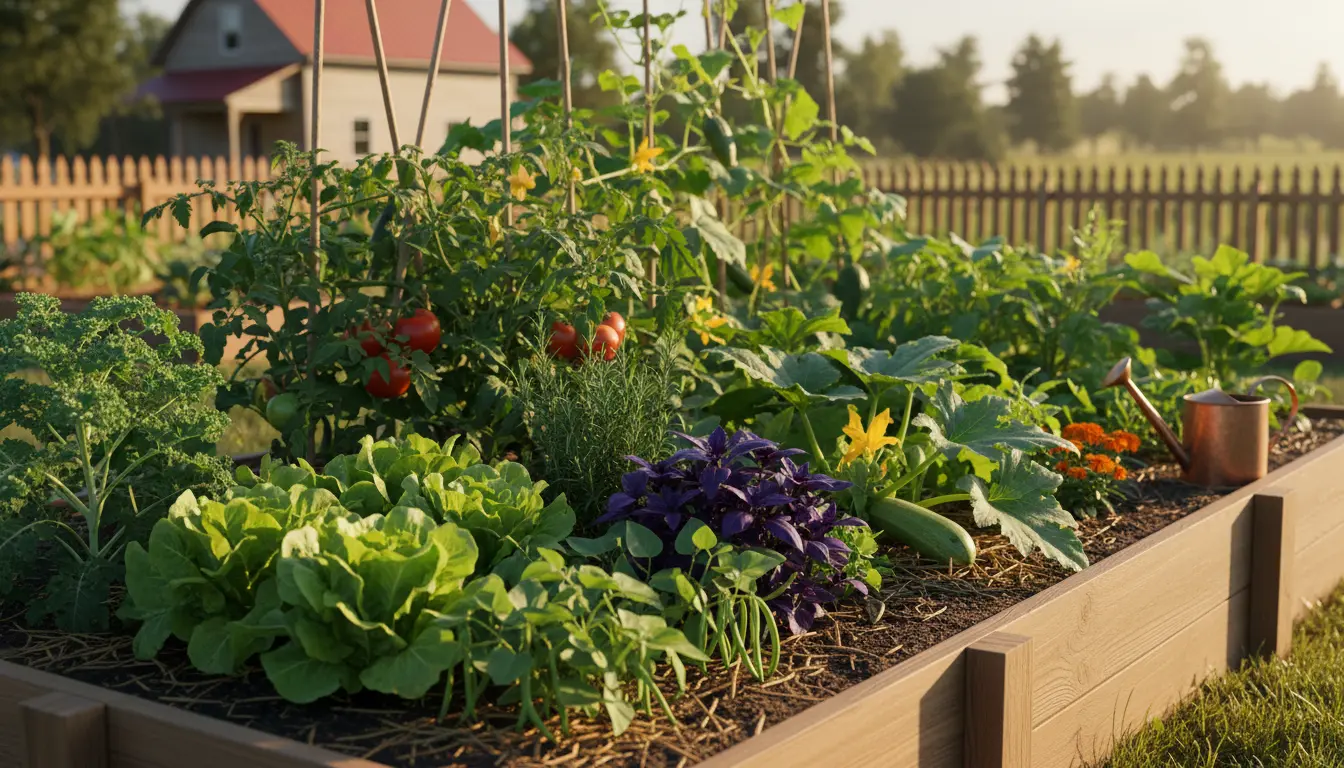
Emma, a beginner gardener, converted a 10×10 raised bed to grow vegetables for her family of three. She followed simple steps: choose full sun, add 3 inches of compost, and plant a mix of lettuces, cherry tomatoes, bush beans, and carrots.
In the first season she harvested weekly salad greens, five tomato plants yielding 40–60 cherry tomatoes each, and a steady supply of beans. Her initial investment in soil and plants paid off in fresh produce and lower grocery bills.
Practical Tips and Examples for New Gardens
- Start small: a single raised bed or 4–6 containers reduces complexity.
- Use stakes or cages for tomatoes to improve air flow and reduce disease.
- Keep a gardening log: note planting dates, varieties, and harvests for next season planning.
Planting marigolds near tomatoes can deter some common pests and attract beneficial insects that help control aphids and whiteflies.
Quick Checklist to Start Your Vegetable Garden
- Select a sunny site and plan layout.
- Test and amend soil; add compost.
- Choose easy, climate-appropriate crops.
- Plant with correct spacing and timing.
- Water deeply, mulch, and monitor pests.
- Harvest regularly and maintain soil for next season.
Conclusion
Starting a vegetable garden is manageable with planning, basic soil preparation, and consistent care. Even small plots or containers can produce satisfying results for beginners and experienced gardeners alike.
Begin with a simple plan, track what works, and expand over time. Enjoy the process and the fresh food from your own backyard.