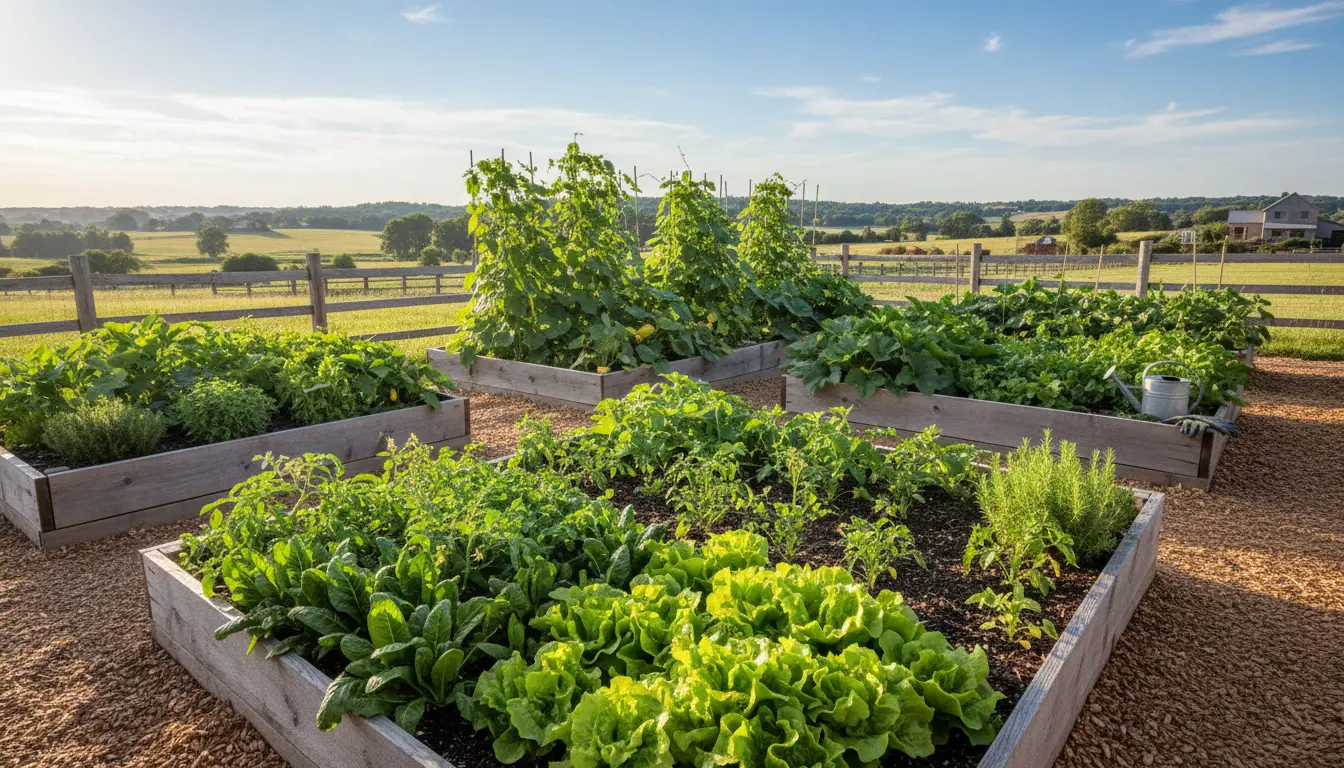
Why Choose a Raised Vegetable Garden
Raised vegetable garden beds make growing food easier in small spaces. They warm earlier in spring, drain better, and reduce soil compaction.
For beginners, a raised vegetable garden offers controlled soil quality and simpler pest management. It also improves accessibility for planting and harvesting.
Planning a Raised Vegetable Garden
Start with a clear plan before you build. Good planning reduces wasted time and materials and increases your crop yield.
Choose the Right Location for Your Raised Vegetable Garden
Pick a spot that receives at least 6 hours of direct sunlight for most vegetables. Avoid low, soggy areas where water pools.
Consider access to water, wind exposure, and proximity to patios or walkways for ease of maintenance.
Decide Bed Size and Layout
Standard raised beds are 3–4 feet wide so you can reach the center from either side. Length can vary; common sizes are 4×8 feet.
Leave 2–3 foot paths between beds for comfortable movement and wheelbarrow access.
Materials and Tools You Will Need
- Wood boards (cedar or untreated lumber), composite, or recycled brick
- Quality topsoil and compost
- Landscape fabric (optional) to reduce weeds
- Basic tools: shovel, level, drill, measuring tape
Building and Filling a Raised Vegetable Garden
Building a raised bed is straightforward and can be done in a day. Focus on sturdy corners and a level base.
Step-by-Step Build
- Measure and mark the bed footprint on the ground.
- Cut and assemble the frame, securing corners with screws or brackets.
- Place the frame on level ground and adjust as needed.
- Optional: line the bottom with cardboard to suppress grass and weeds.
- Fill with a balanced soil mix (see next section).
Soil Mix for a Raised Vegetable Garden
Use a loose, fertile mix that retains moisture but drains well. A common ratio is:
- 40% topsoil
- 40% compost
- 20% coconut coir, peat, or aged bark for drainage and aeration
Amend soil annually with compost to maintain fertility.
Raised beds can extend your growing season by 2–3 weeks in spring because the soil warms faster than ground soil.
Planting and Maintenance in a Raised Vegetable Garden
Good maintenance keeps a raised vegetable garden productive and healthy. Regular checks and small tasks prevent larger problems.
Planting Tips for a Raised Vegetable Garden
- Plant densely but allow proper spacing listed on seed packets.
- Use succession planting to maximize harvest: stagger plantings of lettuce, radishes, and beans.
- Combine tall and short plants to optimize sunlight—tall plants on the north side.
Watering, Feeding, and Soil Care
Raised beds dry faster than in-ground soil. Water deeply once or twice a week depending on weather and soil depth.
Apply a balanced organic fertilizer at planting and a light side-dressing of compost every 4–6 weeks during the season.
Pest Control and Crop Rotation
Inspect plants weekly. Remove damaged leaves and handpick common pests like slugs and caterpillars.
Rotate families of vegetables each year to reduce disease and nutrient depletion. For example, follow nightshades with legumes.
Common Plant Choices for a Raised Vegetable Garden
Choose plants suited to your climate and bed size. Good beginner-friendly options include:
- Tomatoes, peppers, and eggplants (warm-season)
- Lettuce, spinach, and kale (cool-season)
- Beans, peas, and herbs like basil and parsley
Examples of Planting Plans
For a 4×8 bed, divide it into short rows: one row of tomatoes, one of peppers, and remaining rows for herbs and greens.
Alternatively, use square-foot gardening: mix herbs, greens, and root crops in a compact, high-yield layout.
Small Real-World Case Study
Case: A homeowner in Portland built a 4×8 cedar raised vegetable garden in early spring. They filled it with a 40/40/20 soil mix and planted determinate tomatoes, bush beans, and three types of lettuce.
With weekly watering and compost top-ups, the bed produced enough salad greens and tomatoes for a family of four from June to October. Rotating beans into a bed the following year helped restore nitrogen and improved tomato yields.
Maintenance Checklist for Your Raised Vegetable Garden
- Weekly: Water deeply, check for pests, harvest ripe produce
- Monthly: Add a light compost top-dressing
- Seasonally: Rotate crops, replenish soil mix, and repair bed structure
Final Tips for a Successful Raised Vegetable Garden
Start small and expand as you learn. Monitoring microclimate and soil health will give you better harvests over time.
Keep a simple journal to note planting dates, varieties, and yields. This record helps plan improvements each year.
With proper planning, a raised vegetable garden becomes an efficient, low-maintenance source of fresh produce. Follow these steps and adapt to your local climate for steady success.