Overview: Mercury vs Roosevelt dimes
Collectors often ask whether Mercury or Roosevelt dimes are worth more. Both series include common circulating coins and rarer, high-value examples.
This article explains the main differences, how value is determined, and practical steps to identify potentially valuable coins in your collection.
Design and silver content
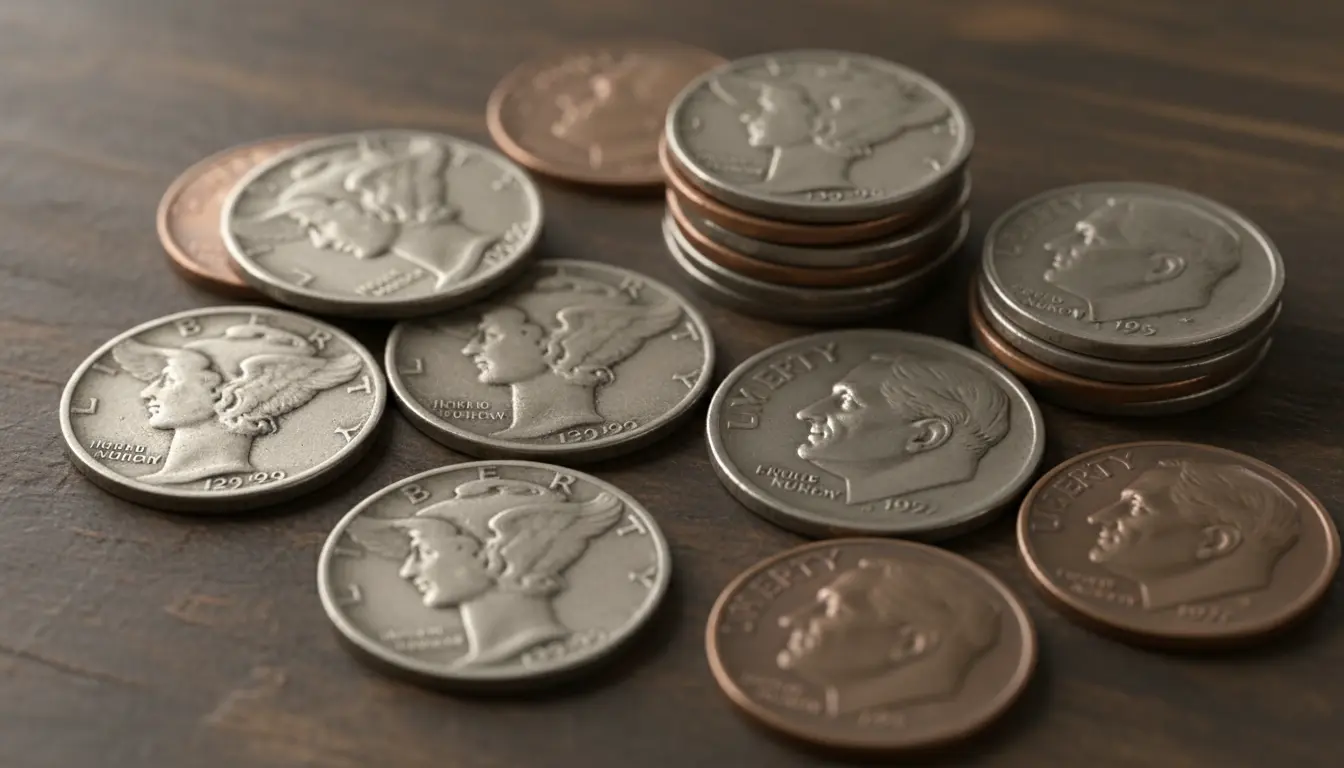
Mercury dimes (officially called Winged Liberty Head) were minted from 1916 to 1945. They are 90% silver and 10% copper, which gives them intrinsic metal value in addition to collector value.
Roosevelt dimes began in 1946 and continue today. Roosevelt dimes minted 1946–1964 are also 90% silver, while those from 1965 onward are copper-nickel clad with no silver content.
Mercury vs Roosevelt dimes: Quick comparison
- Mercury dimes: 1916–1945, 90% silver, many collectible key dates and high-grade survivors that command premiums.
- Roosevelt dimes: 1946–present, 90% silver until 1964, common modern issues are usually only face value unless they are errors or rare dates.
- Generally, key-date Mercury dimes often bring higher prices than common Roosevelt dimes, but pre-1965 Roosevelt silver pieces still carry melt and collector value.
Why Mercury dimes often fetch higher prices
Mercury dimes are older and saw lower mintages for certain years, producing well-known key dates. Those rarer dates and high-grade specimens are in demand among collectors.
Key factors that raise Mercury dime value include low mintage, scarce mint marks, strong strike, and high grade. Collectors prize original surfaces and minimal wear.
Notable Mercury dime key date
The most famous Mercury dime key date is the 1916-D. It is scarce in circulated grades and substantially rarer in high grades, which pushes its market price well above typical silver melt value.
Why Roosevelt dimes can still be valuable
Roosevelt dimes cover a long range of dates and finishes. All Roosevelt dimes dated 1964 and earlier are 90% silver and therefore have intrinsic metal value.
Beyond silver content, certain Roosevelt dimes are sought after by collectors: early years in high grade, proof issues, and coins with notable mint errors or doubling can carry premiums.
Common sources of value in Roosevelt dimes
- Pre-1965 silver content—worth at least their melt value.
- High-grade specimens and proof coins.
- Mint errors such as doubled dies, off-center strikes, or clipped planchets (rarer and more valuable).
How to assess which dime is worth more
Determining value comes down to four practical steps: identify the date and mint mark, check silver content, evaluate condition (grade), and look for errors or die varieties.
Use a good loupe (10x) and a light source. Look for the mint mark on Mercury dimes at the reverse near the rim and on Roosevelt dimes at the obverse (if present for later issues). Condition matters more than age for many collectible coins.
Grading and condition: what to look for
Wear reduces collector value quickly. For both series, coins graded Mint State (MS) or About Uncirculated (AU) bring larger premiums than coins with noticeable wear.
Key eye appeal factors: clear details on the portrait, minimal contact marks, and original luster. Professionals use standard grading scales (e.g., MS60–MS70) but you can still identify obvious high-grade coins with a careful look.
Both Mercury and pre-1965 Roosevelt dimes are 90% silver. That means even some common dates have a baseline value tied to the silver market, separate from collector demand.
Case study: Finding value in pocket change
A casual example: a collector emptied a jar of mixed dimes and found several Roosevelt dimes dated 1964 and earlier. After sorting, the collector took the silver dimes to a dealer and received payment based on silver content.
One of the coins was a well-preserved Mercury dime with a readable 1916 date and a clear mint mark. The dealer identified it as a desirable date and offered a price above melt value, showing how both silver content and rarity can add value.
Practical steps to sell or preserve your dimes
- Sort by date range: separate pre-1965 silver from clad coins.
- Use a loupe to inspect for mint marks, errors, and condition issues.
- Check recent auction results or price guides for comparable coins in similar grades.
- Get high-value suspects professionally graded or ask a reputable coin dealer for a second opinion.
- Store coins in acid-free holders or coin flips to preserve condition if keeping long term.
Which small coin is worth more?
Short answer: it depends. On average, key-date Mercury dimes are more likely to be worth significantly more than most Roosevelt dimes because of scarcity and collector demand.
However, any pre-1965 Roosevelt dime has baseline value due to silver content, and certain Roosevelt coins—proofs, high grades, and rare errors—can be worth more than many Mercury dimes.
When deciding which is worth more, identify the date, mint mark, and condition, then consult price guides or a trusted dealer. That approach gives you a practical, accurate appraisal for your specific coin.
Final tips
If you are new to coin collecting, start by learning to spot pre-1965 dimes and known key dates like the 1916-D Mercury dime. Keep careful records and photos of potential high-value finds.
When in doubt, get a professional opinion before selling. A short inspection by a knowledgeable dealer can reveal whether a coin is worth only its silver, or far more to collectors.